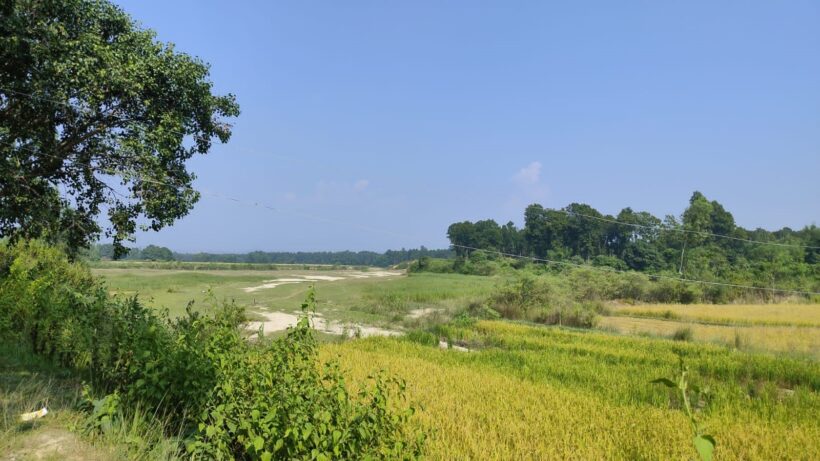
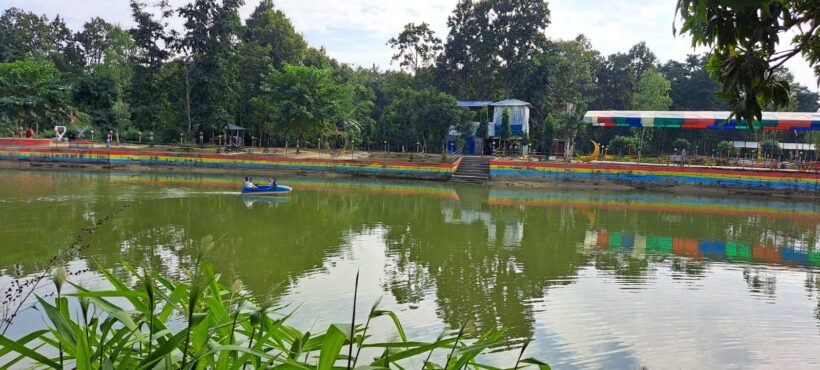
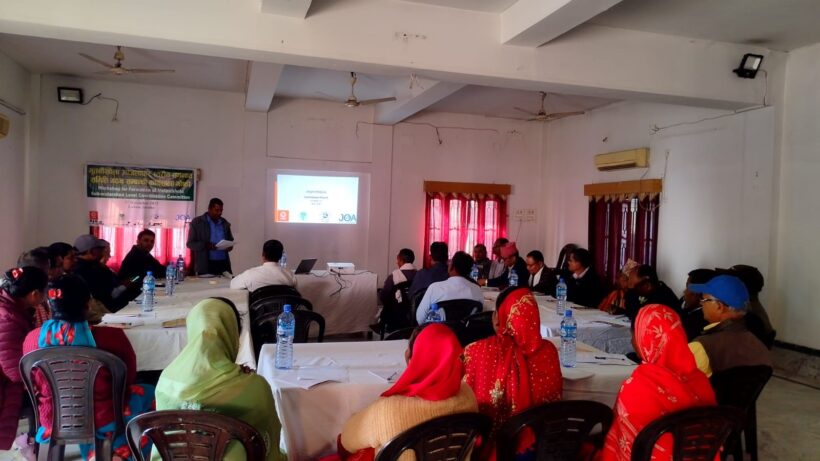
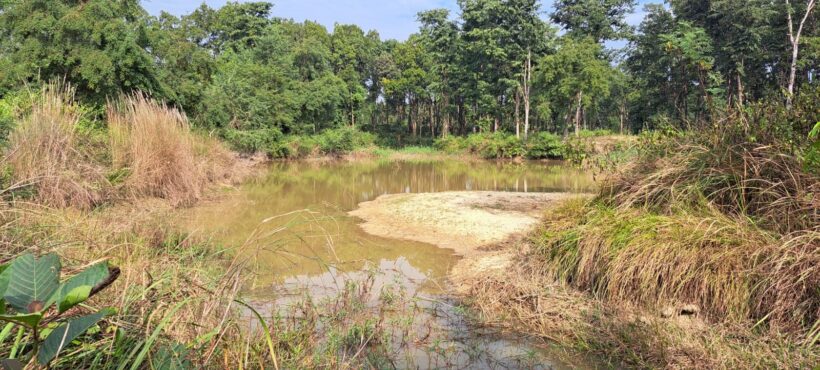
The Mutanikhola Sub-watershed (MKWS) is in Churia region of the Lahan Municipality, Siraha district, Nepal, is an ecologically diverse and environmentally fragile region with huge potential for economic and environmental growth. It comprises 9 community forests and home of different wildlife such as Blue Bull, Bear, Leopard, Python, and Wild Chicken etc. Currently, there are no guidelines, plans or other legislative provisions for natural resource management of the watershed where collection and use of natural resources are unsustainable, and thereby threatening biodiversity in the region. If there is no proper attention given for conservation of the watershed resources, the watershed ecosystems could collapse, which will result huge losses of biodiversity and pushing people into poverty.
In support of CARE Nepal, Federation of Community Forest Users Nepal (FECOFUN) and National Farmers Group Federation (NFGF) are jointly implementing Conservation-friendly livelihoods for women and vulnerable people (SAMRAKSHYAN) Project at Mutanikhola Sub-watershed, Lahan Municipality, Siraha district, Nepal. The SAMRAKSHYAN Project will build capacity of local and marginalized people for effective biodiversity conservation and watershed management through promoting net positive livelihoods and equipping them with skills and knowledge to claim their rights to natural and financial resources. Community level initiatives will be added by working with relevant government bodies to institutionalize project learnings into policy and practice. The project has accepted participatory approaches to promote natural resource management and collective action for conservation.
Objectives
The major objectives of the Samrakshyan project are to:
- Organize and strengthened knowledge base of marginalized people to improve water retention and recharge of Mutani Khola Watershed (MKWS).
- Reduce threats to forest biodiversity in MKWS through watershed level community driven approaches.
- Net-positive livelihoods are adopted by women, Dalit and landless communities, and address multi-dimensional poverty.
- Institutionalized an inclusive system for integrating MKWS conservation with livelihood outcomes.
Methodology
- Selection of implementation partners: Both FECOFUN and NFGF are highly regarded by local stakeholders as experts in their respective sectors. Both continually contribute to government policies on conservation, watershed management and livelihoods, providing the opportunity to embed project practice into government strategy. Both CARE International Samrakshyan: Narrative proposal. Partners have networks at provincial and federal level who will provide technical support to the local institutions created and strengthened by the project.
- Strategic engagement with government stakeholders: Project design has been informed by feedback and suggestions from local government and other relevant government units (such as Division Forest Office and Soil Conservation Office) collected during the needs assessment. The project will continue to seek feedback from these stakeholders during implementation by organizing multi-stakeholder events to share the status of the project and identify opportunities for government engagement. These institutions are also committing funding to support the implementation of livelihood improvement plans and small scale mitigation measures for water use, which will ensure continuation of these activities beyond the lifespan of the project.
- Watershed level intervention with upstream and downstream linkages: The Watershed Level Coordination Committee will enable collaboration between degraded areas upstream (where erosion and rapid water run-off start) and downstream (affected by soil erosion, sedimentation, and floods). The committee will include a minimum of 50% marginalized people, and local government. The committee will support the design, coordination, and implementation of conservation efforts, ensuring ownership from members and support for local institutions during and after the project period.
- Institutionalization of the structures and mechanisms: Watershed management for a set up and strengthened by the project will receive technical and financial support to sustain their activities, through favorable policy and linkages with relevant national networks.
- Strengthening livelihoods: The project will strengthen net positive livelihoods of poor, vulnerable, marginalized, and natural resource dependent households, driven by market demand.
Areas Coverage and the Project’s participants
Coverage – The SAMRAKSHYAN Project is executing in leadership of CARE Nepal along with Nepal Farmers Group Federation (NFGF) and Federation of Community Forestry Users, Nepal (FECOFUN) as consortium partners. The geographic area of the project targets Mutani Khola Watershed (MKWS) which lies in ward number 15 and 18 of Lahan Municipality of Siraha district, Madhesh Province, Nepal. The watershed is a source of biodiversity and livelihoods, particularly for women and marginalized people.
Project Participants (Beneficiaries) – The project targets different Community Forest User Groups (CFUGs), farmers groups, women’s groups, Water Users Group (WUG) Indigenous Peoples groups etc. as the project beneficiaries/participants who are the inhabitants residing within the boundary of the Mutani Khola watershed and directly or indirectly benefitted by the project interventions.
Stakeholders – Lahan Municipality, provincial government’s agencies (Division Forest Office, Soil and Watershed Management Office, Lahan, Siraha) networks of NRM groups including FECOFUN, networks of the farmers groups including NFGF, and other relevant agencies such as media, private sectors, advocacy groups etc. are the key stakeholders of the project.
Major activities accomplished by Samrakshyan Project.
1.Multipurpose Conservation Pond:
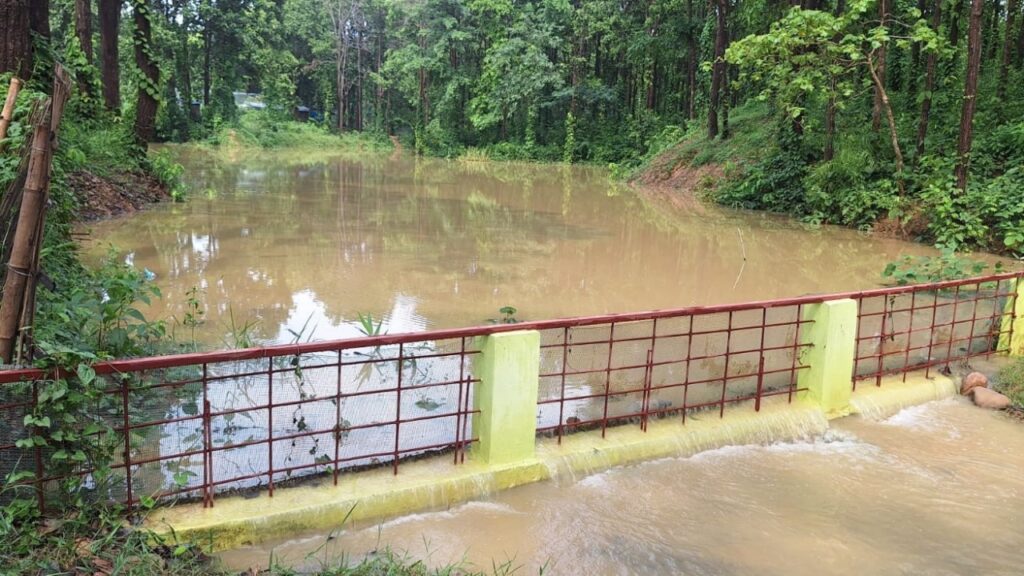
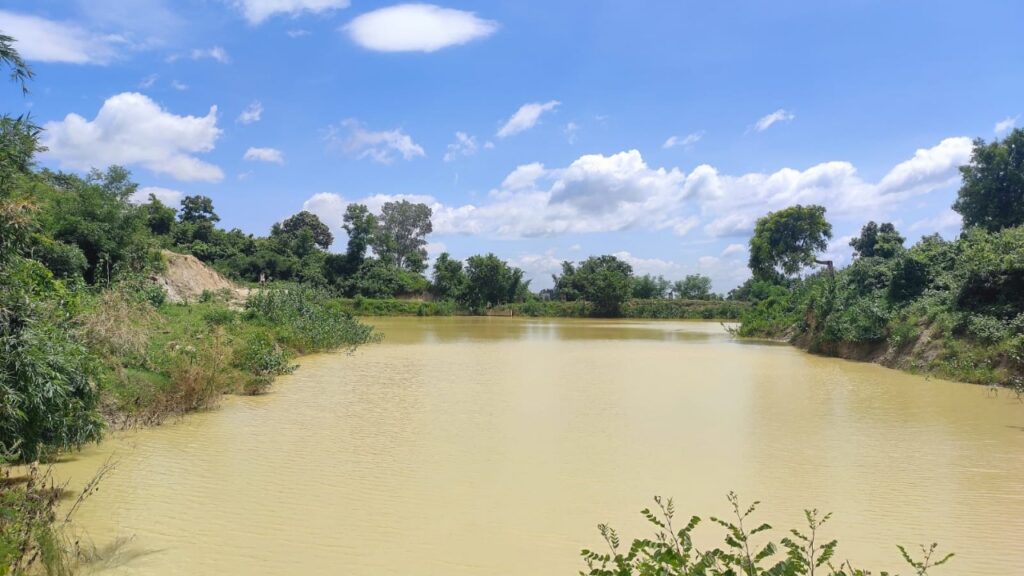
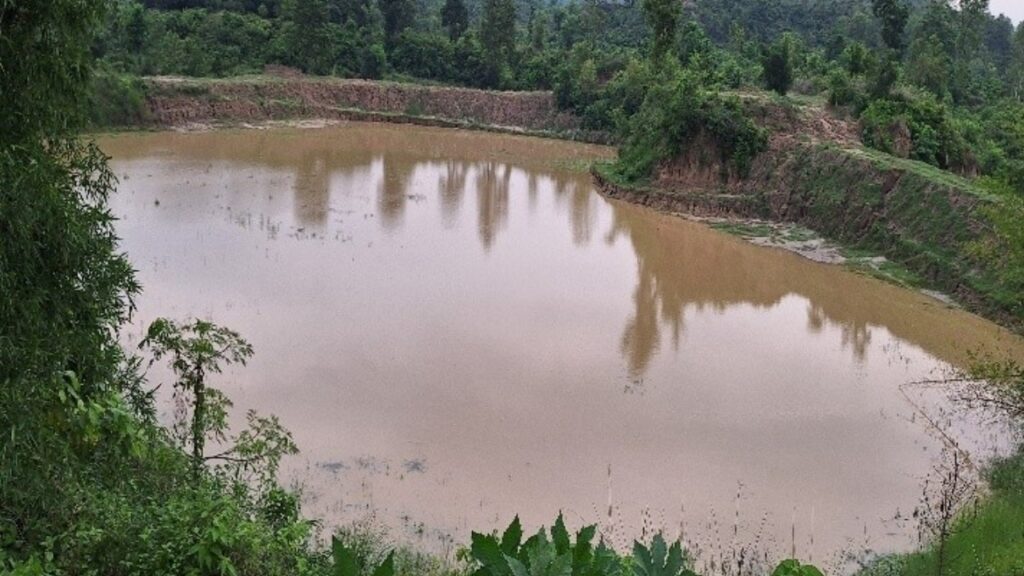
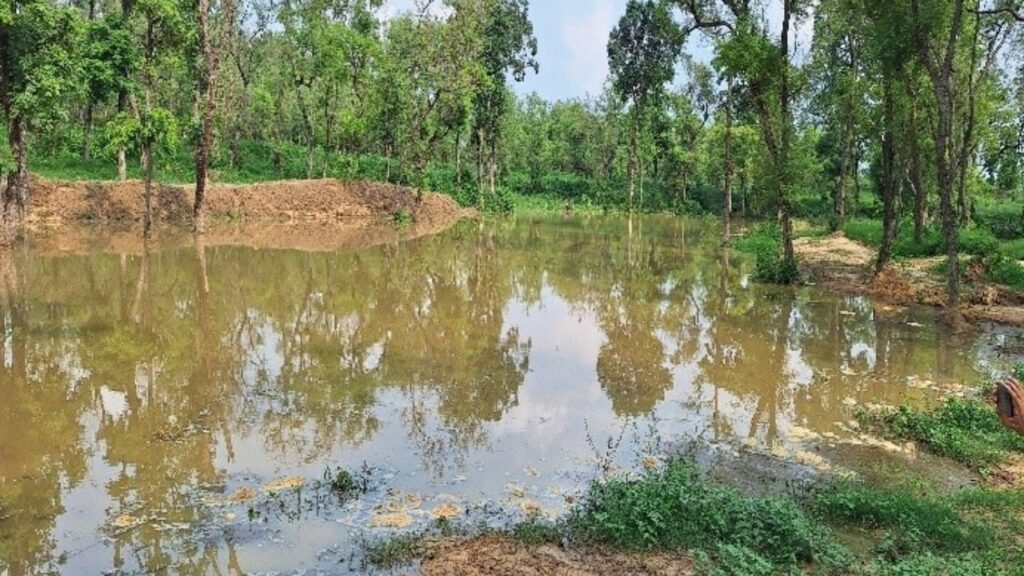
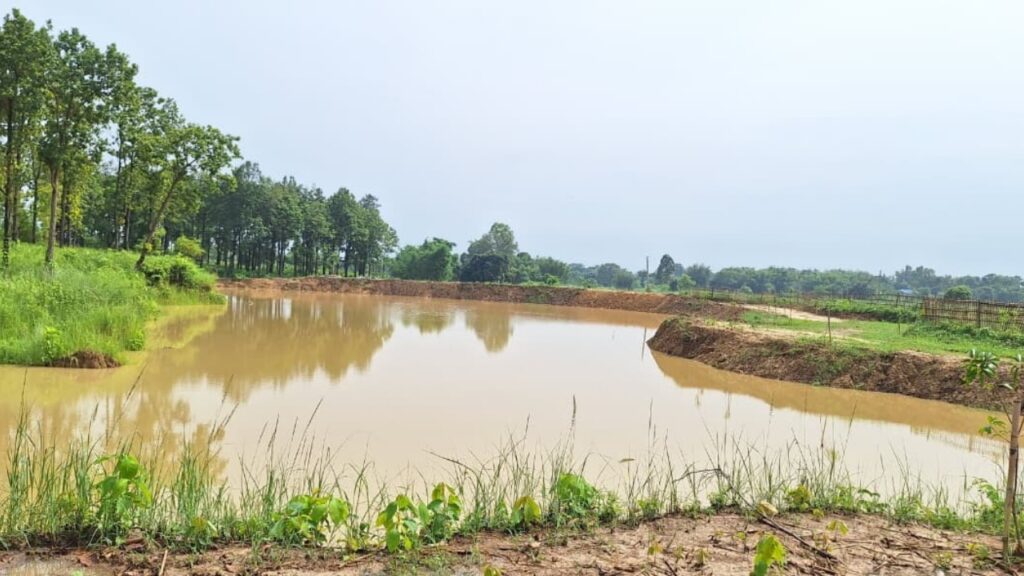
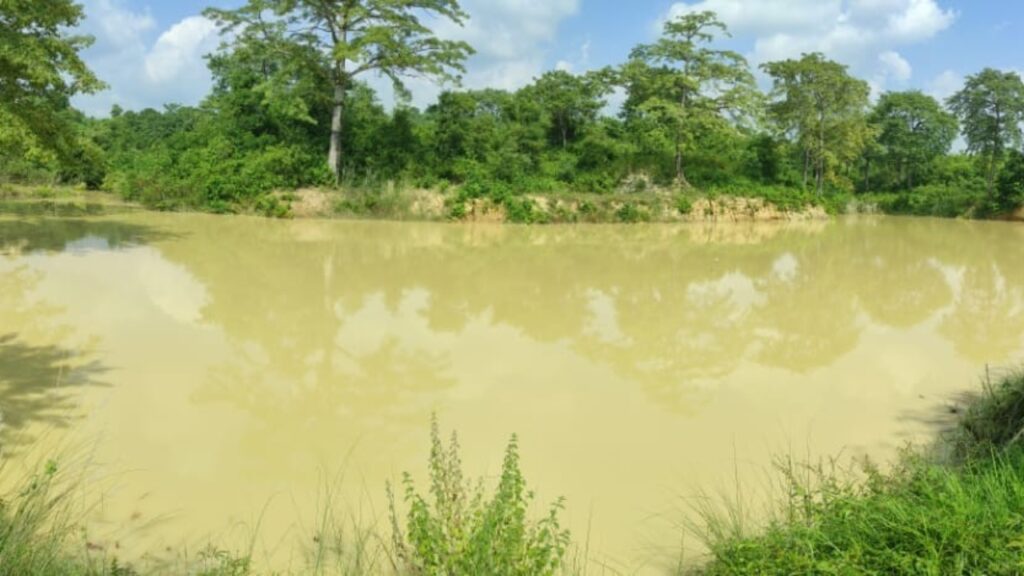
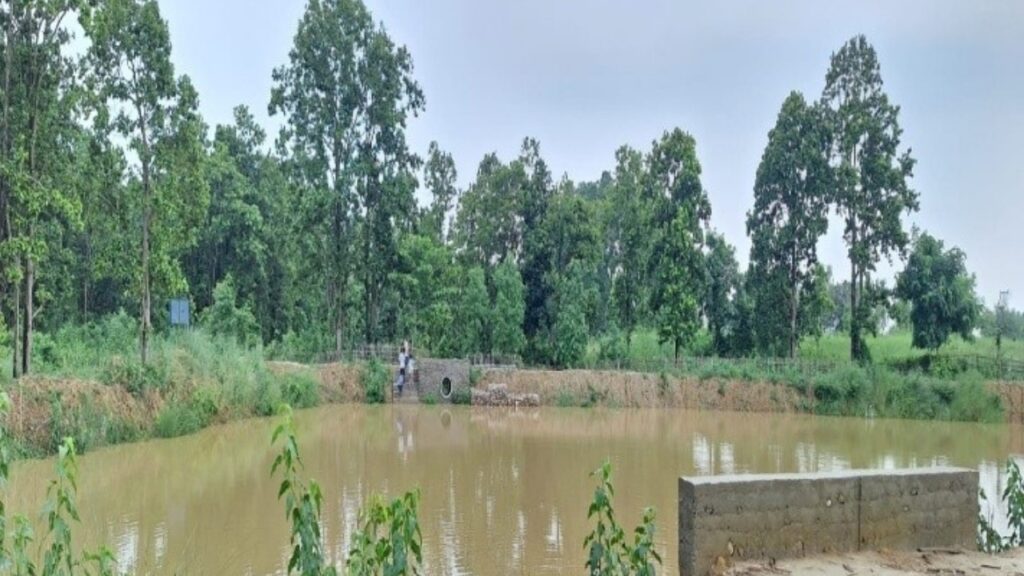
Under Samrakshyan Project, nine multipurpose conservation ponds have been constructed to conserve the rain water harvesting in the Chure area of Mutanikhola watershed which lies at Lahan Municipality 15 and 18 and of Siraha district. This intervention supports in the livelihood of poor and marginalized communities of Mutanikhola watershed region.
The benefits of the multipurpose conservation pond are as follows:
- More than 100 million liters of water has been preserved in approximate 7 Hectares from different community forest’s Land.
- Water stored throughout the year in Conservation Ponds which helps in water retention and recharge around those area
- Fish fingerlings have been placed in the conservation ponds resulting conservation of Biodiversity and generate income for the existing Farmer groups and community members.
- Availability of water for domestic as well as Wildlife.
- Support in Plantation and Forest expansion.
- Point of attraction for various species of Birds, Reptiles, Amphibians and Mammals.
- Plantation of income generating trees and fodder species on the Earthen Bund around the Pond, leads balance among eco-system and livelihood of Communities.
- Promotion of Eco Tourism.
- Recently, during the Drought declared in Madhesh Province by the Nepal Government, the project working areas were lesser affected comparatively to other areas as there was enough availability of water for irrigation, Wildlife and handpumps were fully working due to water percolation from pond underneath the ground resulting Ground water Table (GWT) recharge.
Photos of Conservation Ponds:
- River Training Structures:
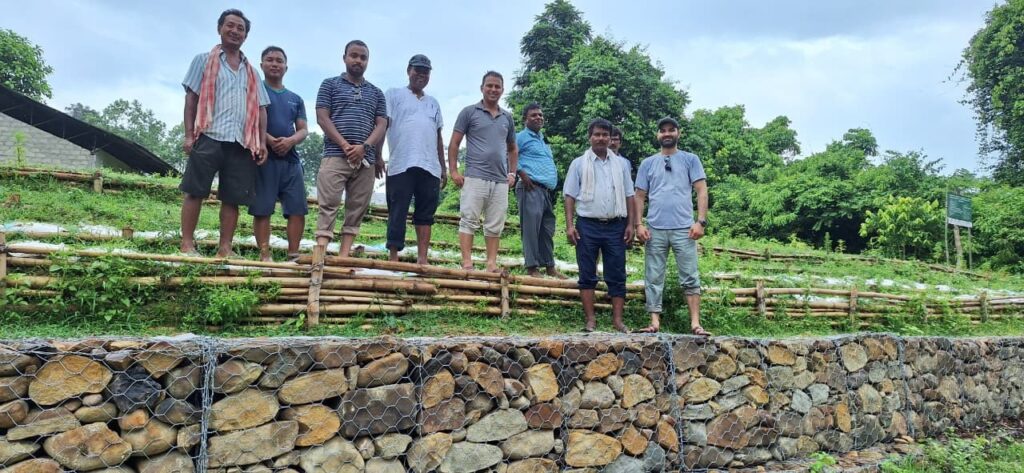
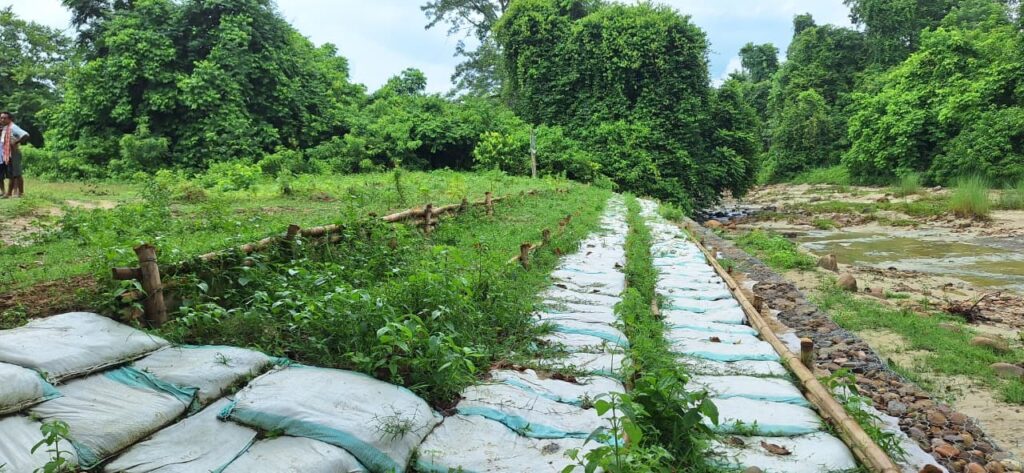
Samrakshyan Project have implemented nature-based solutions and river training structure at 5 locations across different CFUG’s, to protect land, forests and communities from riverbank erosion.
The major outcomes of the intervention are as follows:
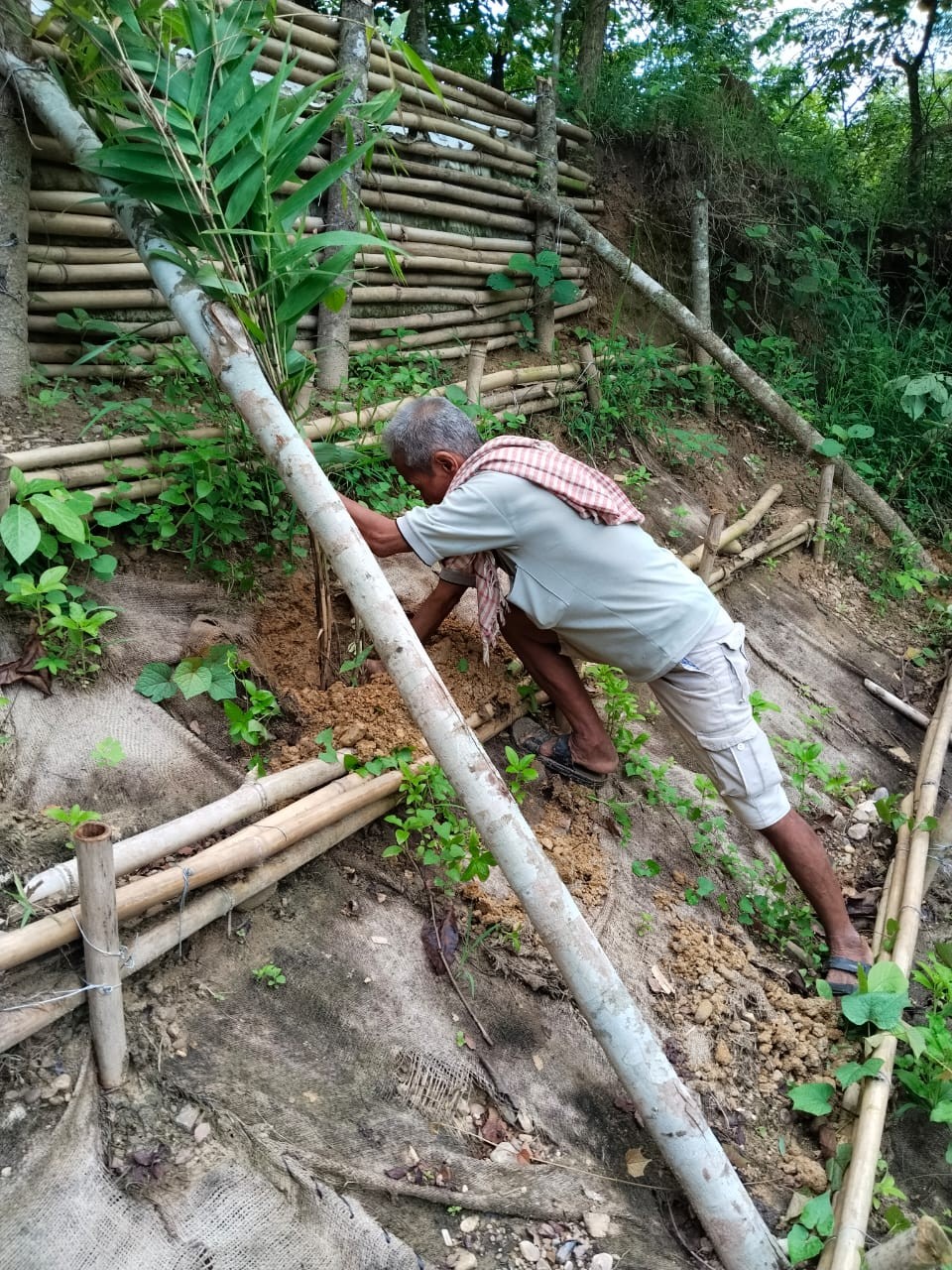
- Bio Engineering techniques like Bamboo Bandalings, bamboo crib wall, jute netting, geo bags etc., used for the construction is Eco friendly, cost efficient and easy to maintenance.
- Prevention of the degradation of cultivable land.
- Controlling erosion by supporting.
- Makes conservation efforts sustainable and effective through local involvement.
- Enhancing land stability by planting grass (Amriso, Napier) and saplings.
- Conservation of biodiversity and keeps environmental balance through increased greenery.
- Provides short term income generating opportunities to local community members.
- Sustainable and have beautiful aesthetic view.
- Capacity building of local community people due to active participation and proper use of local resources.
- Low Carbon emission by using materials for construction which are cheap, easily available in locality and based on nature.
- Protection of Residential areas, road, and agricultural fields.
Photos of River Training and Bioengineering: